Blog
Honda Navi Dirt Bike Review: Should You Buy Gas or Go Electric?
Jul
The Honda Navi has created a lot of buzz among new riders and budget-conscious buyers. With its low price, automatic transmission, and playful mini-bike design, the Navi looks like an easy entry point into motorcycling. At the same time, electric dirt bikes and high-powered e-bikes are becoming increasingly popular, giving buyers more choices than ever.
This has sparked an interesting question: Is the Honda Navi worth buying, or does an electric alternative make more sense?
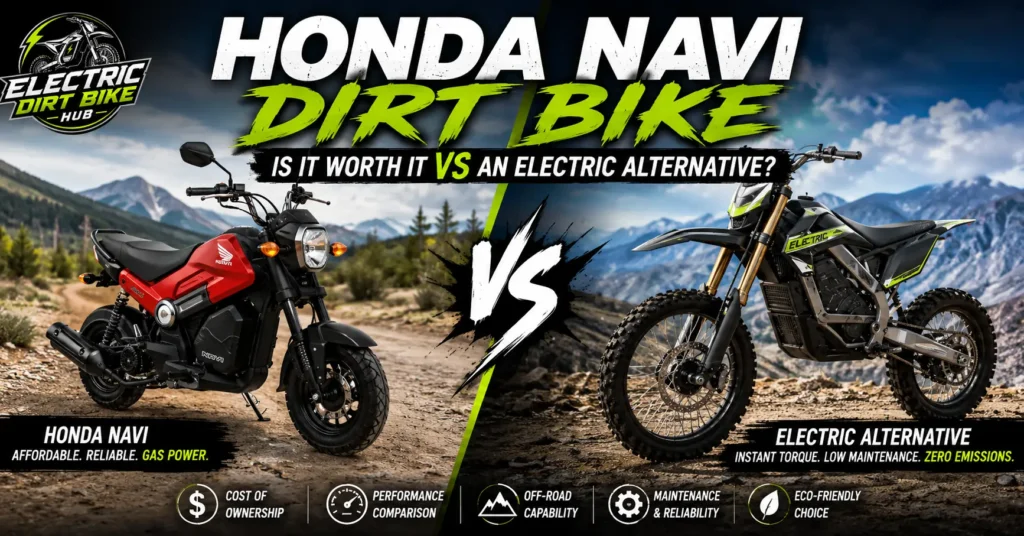
The answer depends on how and where a rider plans to use the bike. The Honda Navi excels as an affordable, beginner-friendly mini motorcycle for commuting and casual rides. However, many electric alternatives offer better off-road capability, lower maintenance requirements, and instant power delivery.
This guide takes a close look at the Honda Navi’s strengths and weaknesses, compares it with electric alternatives, and helps buyers determine which option best fits their riding style.
What Is the Honda Navi and Why Has It Become So Popular?
Honda introduced the Navi as part of its miniMOTO lineup. Although it resembles a small motorcycle, it borrows many components from scooters, including an automatic CVT (Continuously Variable Transmission) that removes the need for clutch operation and gear shifting.
The simplicity of the Honda Navi is one of its biggest selling points. New riders can twist the throttle and start riding almost immediately. The bike also weighs significantly less than many full-sized motorcycles, making it easier to maneuver and less intimidating for beginners.
Another major factor behind its popularity is affordability. Few new motorcycles on the market come close to the Honda Navi’s entry-level price. For buyers looking for inexpensive transportation or a fun recreational machine, the Navi presents an attractive option.
The bike’s compact dimensions also appeal to college students, campers, and urban commuters who want something easy to park and simple to ride.
What Makes the Honda Navi Popular for Trails?
The Honda Navi is not designed as a dedicated dirt bike, but that has not stopped riders from taking it onto gravel roads, campground paths, and light trails.
Several characteristics make the Navi enjoyable in these environments:
-
Lightweight Design: The Honda Navi weighs approximately 236 pounds, making it easier to control than many traditional motorcycles. New riders often appreciate this lighter feel because it builds confidence and reduces the fear of dropping the bike.
-
Low Seat Height: The 30.1-inch seat position allows many riders to place both feet comfortably flat on the ground. This feature is especially helpful when navigating uneven surfaces or stopping on loose terrain.
-
Simple Controls: The automatic transmission eliminates the need to shift gears manually. Riders can focus on steering, braking, and enjoying the experience rather than worrying about clutch control.
-
Fun Factor: Many owners describe the Navi as a bike that puts a smile on their faces. Its small size and playful personality encourage casual exploration and relaxed riding.
For riders who only plan to travel on maintained dirt roads or gravel paths occasionally, the Honda Navi can provide an entertaining experience.
Honda Navi Specs: What You Get for Around $2,250
The Honda Navi delivers a surprisingly complete package considering its price point.
| Specification | Honda Navi Capability |
| Engine | 109cc Air-Cooled Single-Cylinder |
| Transmission | Automatic CVT |
| Top Speed | Approximately 50-55 mph |
| Fuel Economy | Around 100 mpg |
| Wet Weight | Approximately 236 lbs |
| Ground Clearance | 6.1 inches |
| Seat Height | 30.1 inches |
| Fuel Capacity | 0.9 gallons |
The 109cc engine produces enough power for neighborhood riding, city commuting, and short recreational trips. Fuel economy remains one of the Navi’s strongest advantages. Many owners can ride for extended periods while spending very little on gasoline.
Honda also includes practical, lockable storage underneath the bodywork, which can hold small items like gloves, tools, or personal belongings. For a bike at this price, the overall package is impressive. However, specifications alone do not tell the entire story, especially when off-road capability becomes part of the buying decision.
Is the Honda Navi Actually a Dirt Bike?
The short answer is no. The Honda Navi is not a true dirt bike.
Honda markets the Navi as a miniMOTO, which places it closer to a mini street motorcycle than a purpose-built off-road machine. While the bike can handle light gravel roads and smooth dirt paths, it lacks many of the features riders expect from a dedicated dirt bike.
Traditional dirt bikes typically include:
- Long-travel suspension to absorb hard hits
- Knobby off-road tires for maximum traction
- Larger wheels (often 18 to 21 inches) for obstacle clearance
- Higher ground clearance to avoid bottoming out
- Lightweight frames designed for aggressive terrain
- Strong braking systems built for off-road surface friction
The Honda Navi offers none of these features in a significant way. Its small wheels, basic street suspension, and road-oriented tires limit its capabilities once the terrain becomes rough. That does not make the Navi a bad motorcycle—it simply means buyers should set realistic expectations.
Limitations of the Navi on Real Dirt Trails
The Honda Navi’s low price comes with compromises. These compromises become much more noticeable when the pavement ends and you tackle actual terrain.
Small Wheels Reduce Stability
The Navi’s 12-inch front and 10-inch rear wheel setup works well around town but becomes a distinct disadvantage on rough surfaces. Larger wheels usually roll over rocks, ruts, and uneven ground more smoothly. Smaller wheels tend to drop deeply into holes and bounce over obstacles, making the ride less stable and more challenging. On rough dirt trails, riders will feel every bump and imperfection in the terrain.
Limited Suspension Travel
Suspension plays a huge role in off-road performance. Purpose-built dirt bikes use long-travel suspension systems that absorb impacts and maintain traction on uneven ground. The Honda Navi uses a much simpler suspension setup designed primarily for paved city roads, resulting in a firmer ride that becomes uncomfortable on washboard roads and rocky trails.
Road-Oriented Tires
Traction is critical off-road. The Honda Navi’s tires are designed mostly for street pavement. They perform adequately on dry, packed gravel roads but struggle significantly in mud, loose sand, and slippery conditions. A dedicated dirt bike or electric trail bike generally offers far more grip and confidence on difficult surfaces.
Ground Clearance and Structural Limits
The Navi’s 6.1 inches of ground clearance is sufficient for everyday street riding, but large rocks, deep ruts, and uneven trails can quickly smash into the underbody. Furthermore, the frame, suspension, and wheels are not structurally designed for jumps, aggressive trail riding, or challenging off-road environments. Pushing the bike beyond its intended purpose can lead to mechanical damage and reduce rider safety.
Why Riders Compare the Honda Navi With Electric Alternatives
Despite their differences, the Honda Navi and modern electric alternatives often attract the exact same type of buyer due to several overlapping benefits.
Similar Purchase Prices
The Honda Navi remains one of the least expensive new gasoline motorcycles available. At the same time, several electric mini bikes, high-powered e-bikes, and used electric dirt bikes fall into a highly similar price range. For many shoppers, the choice naturally becomes: “Should I buy an affordable gas-powered mini motorcycle or go electric?”
Beginner-Friendly Experience
Both options appeal heavily to first-time riders. The Honda Navi removes the complexity of manual shifting with its twist-and-go throttle, while electric bikes eliminate gears and clutch work entirely. Both provide a incredibly gentle learning curve compared with traditional motorcycles.
Low Operating Costs & Fun
The Honda Navi delivers excellent fuel economy, while electric alternatives generally cost very little to charge via a standard wall outlet. Both categories promise affordable, lightweight fun. Some riders prefer the familiar mechanical feel and exhaust sound of a gasoline engine, while others enjoy the quiet operation and instant acceleration of electric power.
Electric Alternatives at a Similar Price Point
If you are looking at the Navi’s price bracket, several electric categories deserve a close look:
-
High-Powered Electric Bikes: Performance-oriented e-bikes (like those from Sur-Ron, Talaria, or Segway) have improved dramatically. Some models offer impressive acceleration and can handle technical trails far better than the Honda Navi because of their mountain-bike-style agility.
-
Electric Mini Bikes: Brands like Coleman and Razor offer electric mini bikes that target many of the same customers as the Honda Navi. These bikes feature compact dimensions, lightweight frames, and simple controls, with a quiet operation that makes them attractive for backyard and neighborhood use.
-
Used Electric Dirt Bikes: The used market sometimes provides access to premium machines that would otherwise exceed a buyer’s budget. Older electric trail bikes can deliver significantly better off-road capability than the Honda Navi, though battery health and replacement costs should always be evaluated carefully.
-
Entry-Level Electric Motorcycles: Several manufacturers now offer beginner-friendly electric street motorcycles aimed at urban commuters. These machines provide stronger acceleration and lower maintenance requirements than gasoline-powered alternatives.
Honda Navi vs Electric Alternatives: Side-by-Side
Neither option is universally better; instead, each excels in completely different situations.
| Feature | Honda Navi MiniMOTO | Electric Alternative (Trail/E-Bike) |
| Power Source | Gasoline Engine | Lithium-Ion Battery Power |
| Top Speed | 50-55 mph | Varies by model (20-60 mph) |
| Refueling Time | A Few Minutes at any gas station | Several Hours via charger |
| Maintenance | Moderate (Oil, spark plugs, filters) | Very Low (Tires and brakes) |
| Noise Level | Moderate exhaust note | Near-silent operation |
| Off-Road Capability | Limited to light gravel and paths | Often significantly better on trails |
| Power Delivery | Gradual CVT power band | Instant torque from zero RPM |
| Energy Costs | Low gas expenses (~100 mpg) | Extremely low electricity costs |
Real Cost of Ownership: Gas vs Electric
The sticker price only tells part of the story. Long-term ownership costs can significantly affect whether the Honda Navi or an electric alternative delivers better overall value.
Purchase Price vs. Energy Costs
The Honda Navi remains one of the most affordable new motorcycles available in the United States. For budget-conscious buyers, it offers one of the lowest barriers to motorcycle ownership. However, electric bikes cost even less to run over time. While the Navi delivers an impressive 100 mpg, charging an electric battery often costs only a few cents per charge, resulting in lower energy expenses over several years.
Maintenance Requirements
Gas-powered motorcycles contain numerous moving parts that require routine attention.
The Honda Navi maintenance checklist includes: Regular oil changes, air filter replacements, spark plug maintenance, drive system (CVT belt) inspections, and routine fluid checks.
Electric alternatives eliminate the vast majority of these mechanical components. There are no oil changes, fuel system cleanings, engine tune-ups, or exhaust systems to worry about. For riders who want a low-maintenance ownership experience, electric options hold a clear advantage.
Battery Replacement, Insurance, and Resale
Electric ownership is not entirely maintenance-free; battery health gradually declines over time, and a replacement battery can be a major expense down the road.
On the flip side, the Honda Navi benefits from the Honda brand’s stellar reputation and widespread dealer network, meaning replacement parts are cheap and resale value stays high. Insurance is typically highly affordable for the Navi due to its small 109cc displacement, while electric alternatives may require no registration or insurance at all depending on local e-bike classifications.
Which Option Performs Better Off-Road?
If your main goal is escaping into nature, the performance gap between these two options becomes very clear.
-
Gravel and Forest Service Roads: The Honda Navi handles smooth, flat gravel roads reasonably well. Its lightweight design and manageable power output make easy dirt roads approachable for beginners. However, once forest roads introduce loose rocks, washboard sections, and deep ruts, the Navi’s stiff street suspension and small wheels make the ride uncomfortable and slow.
-
Mud, Loose Terrain, and Technical Trails: This is where the Honda Navi struggles heavily. Its road-oriented street tires lack the knobby tread needed for traction in mud or loose sand. Technical trails with rocks and steep climbs expose the Navi’s lack of low-end torque.
-
The Electric Advantage: Electric dirt bikes hold a massive advantage here. Their lightweight chassis construction, instant torque delivery from a dead stop, and purpose-built off-road suspension components allow riders to effortlessly tackle terrain that would be completely unrealistic—and unsafe—for the Navi.
Sustainability Considerations: Does Electric Have an Advantage?
Environmental impact increasingly influences buying decisions today. The Honda Navi delivers impressive fuel economy and consumes relatively little gasoline compared with full-sized motorcycles, making its carbon footprint remarkably low for a gas-powered machine.
Electric alternatives eliminate tailpipe emissions entirely during operation. They also produce significantly less noise pollution, which can make them highly appealing for recreational riding in backyard settings or shared trails, reducing disturbances for nearby residents and local wildlife.
However, a balanced view requires looking at the full lifecycle. Battery manufacturing requires raw materials and energy-intensive production processes, and battery recycling infrastructure is still evolving. The Navi countered this with extreme longevity—a well-maintained Honda engine can easily last for decades on the road.
Final Verdict: Which One Should You Buy?
The Honda Navi succeeds because it delivers something increasingly rare in today’s market: simple, affordable fun backed by legendary reliability. However, calling the Honda Navi a dirt bike is misleading. It is an urban commuter that can handle an occasional gravel path.
Choose the Honda Navi if:
-
Affordability and a low initial purchase price are your top priorities.
-
The vast majority of your riding will happen on paved city streets.
-
You want the fast refueling convenience of traditional gas stations.
-
You value an established dealer network for parts, service, and high resale value.
Choose an Electric Alternative if:
-
True off-road trail riding and exploring rough terrain is a primary goal.
-
You want a low-maintenance machine with zero oil changes or carburetor worries.
-
You love the feeling of instant acceleration and immediate torque.
-
Quiet operation matters to you for riding around neighborhoods or sensitive outdoor spaces.
For urban commuting and casual fun, the Honda Navi remains one of the best values on two wheels. But for riders chasing rugged trails and genuine off-road adventures, an electric alternative is worth the investment
Read More Related Article
Honda Grom vs Sur-Ron Light Bee X
Sur-Ron Storm Bee vs Ultra Bee
